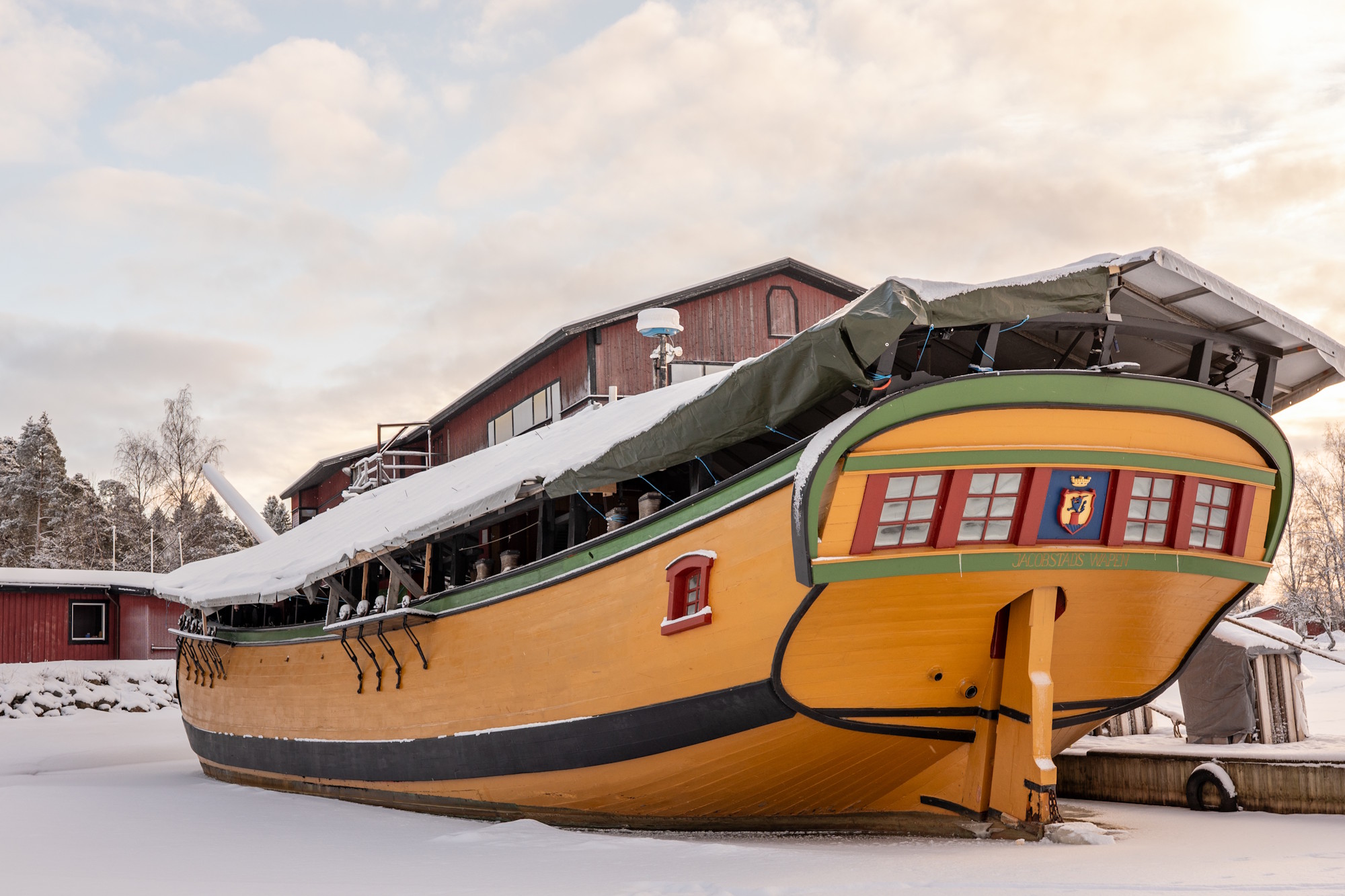
Jacobstads Wapen
A replica of the galleass launched in Jakobstad in 1767, built by volunteers according to the original drawings.
Meet Jacobstads Wapen
Vega is a three-masted wooden schooner built in Turku in 1952 as part of Finland’s war reparations to the Soviet Union. Of the 91 schooners built, only two remain. Vega is the only one to have returned to Finland.
After the Continuation War, Finland had to pay war reparations to the Soviet Union, and the payment had to be made in goods. One fifth consisted of new ships, including 91 three-masted wooden schooners. No one in Finland had built wooden ships this large for decades, but all of them were completed within seven years.
Designer Jarl Lindblom solved the challenge using new methods. The frames were made from laminated timber instead of traditional mortise-and-tenon joints, and the hulls were built in series, much like an assembly line. Vega was one of the first ships to have laminated timber frames. She was schooner number 44 built by Oy Laivateollisuus Ab in Turku and was launched in July 1952, the final year of the war reparations.
Vega was built in an assembly hall 188 metres long. The keel, frames and upper planking strakes were made from laminated timber. The hull and deck are made of pine, while the bow sections are oak. Below the waterline, the hull was clad in copper sheeting to prevent marine growth. The foremast was fitted with square sails so that the cadets could learn to climb the rigging.
91
schooners built as war reparations
3 116
cadets trained aboard
5 times
around the world, the total distance she sailed
40 ton
objects from Vega have been preserved
Tallinn became Vega’s home port, and she served as a training ship for the Soviet merchant fleet. Cadets from nautical schools in Tallinn, Riga, Klaipėda and Leningrad sailed aboard her in the Baltic Sea and the Gulf of Finland. A total of 3,116 cadets trained aboard her over the years. Her final sailing season was in 1978.
Vega had a crew capacity of 58, and up to 50 cadets could join a voyage. The cadets lived in cabins for four or six people, while some slept in hammocks below deck. After their first year at nautical school, they completed their first three-month sea training period aboard.
Young cadets were not granted visas, so Vega sailed only in the Baltic Sea and the Gulf of Finland. In 1962, she received a new 300-horsepower diesel engine in the hope that she could sail farther, but she was never allowed to leave the Baltic. She also appeared in feature films and music videos.
In 1979, Vega was transferred to the Maritime Museum in Tallinn, and in 1986 she was hauled ashore. There was not enough money for restoration, and the schooner began to deteriorate.
In Jakobstad, Jacobstads Wapen had just been built, and people were looking for another vessel to work on. The Vega Foundation was established in 1996, and that same year the Estonian government decided to donate Vega to the foundation. On 18 June 1997, everything was ready for sea in Tallinn, and Vega was towed across the sea on a barge. After a stop in Rauma over Midsummer, the barge reached Jakobstad at six o’clock in the morning on 23 June. During the night leading into 25 June, seven minutes after midnight, she was finally inside the hall.
Today, Vega stands on land in her own hall, showing three stages of her life.
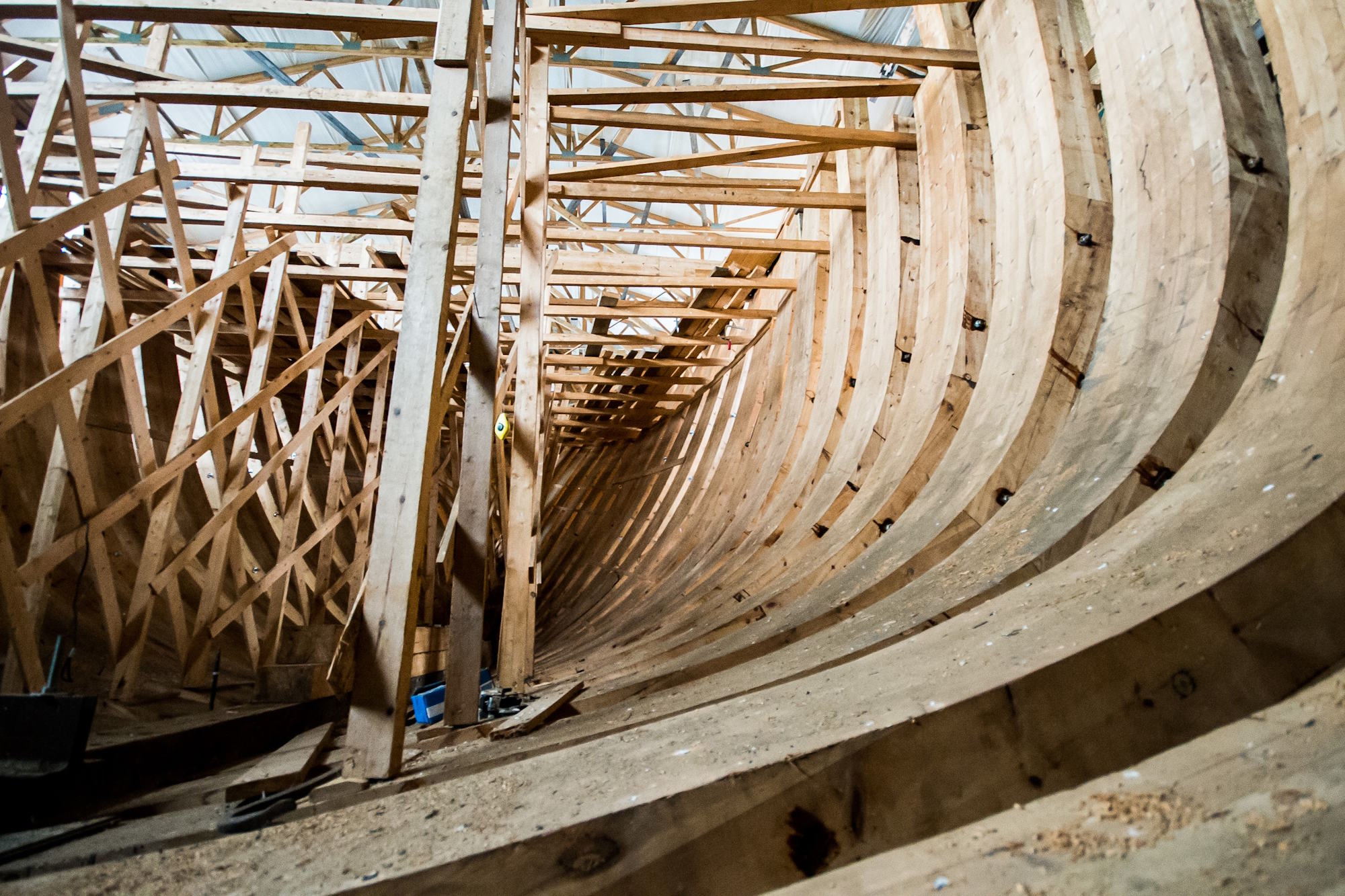
Shows how the schooner is constructed.
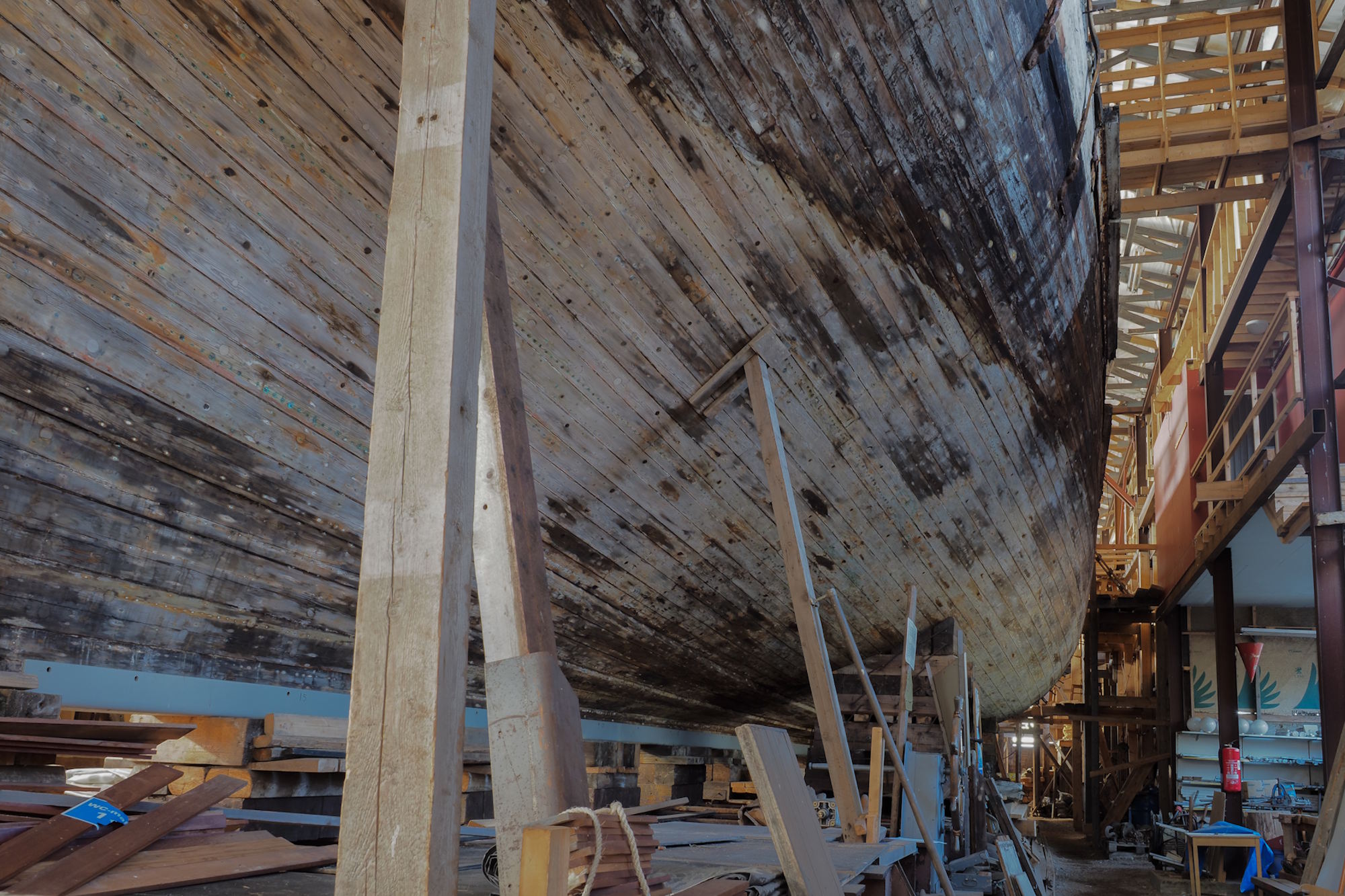
Shows the deterioration.
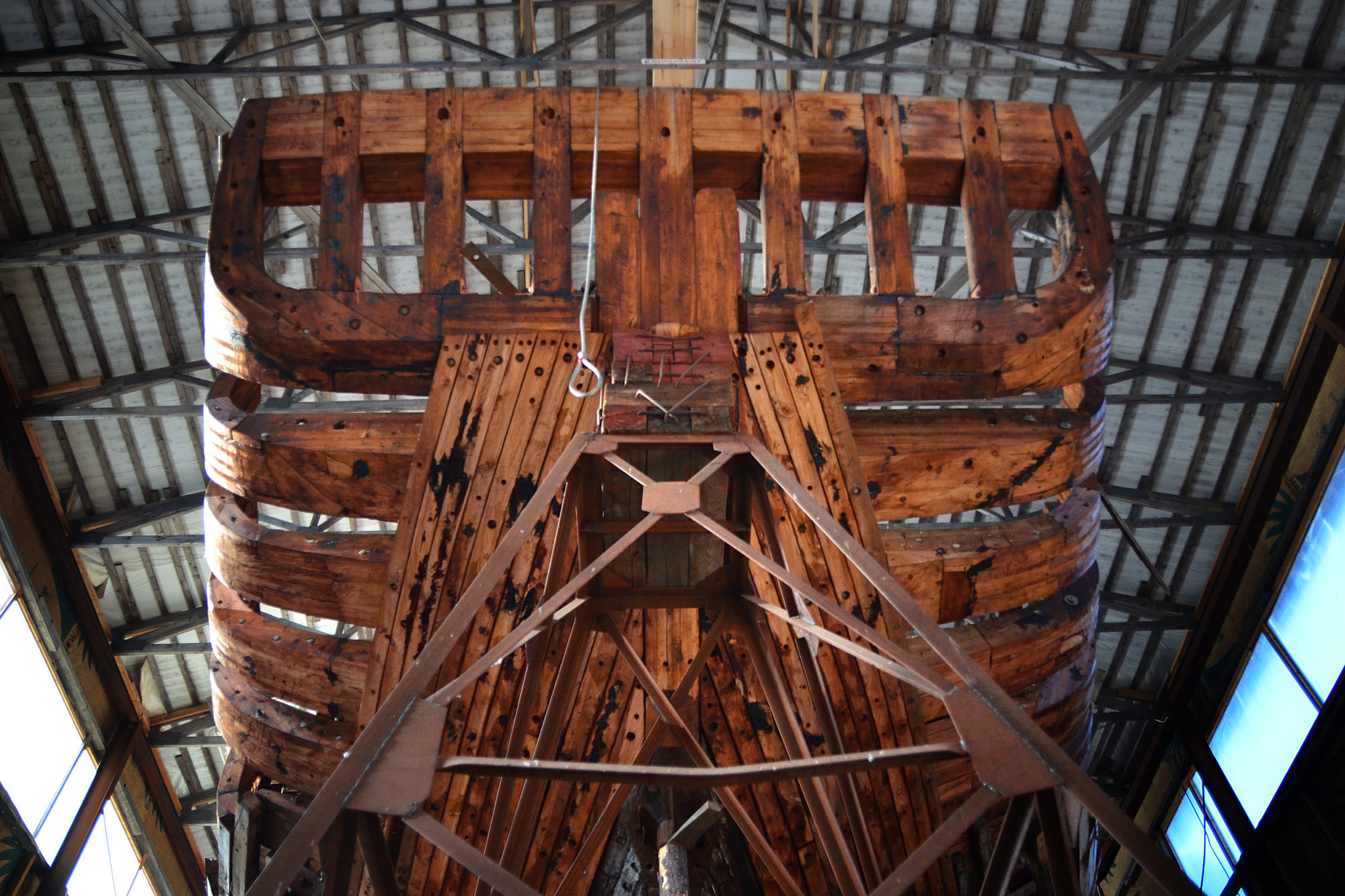
Restored to how she looked in 1952.
Vega will not sail again. She will be preserved, like the royal warship Vasa in Stockholm.
We have installed new deck beams and a new deck, rebuilt the captain’s cabin and wheelhouse, fitted the rail and replaced the planking and frames. Everything from the original that could be preserved has been reused. You can see how the captain and radio operator lived and where the helmsman stood while steering.
Vega in the hall at Skeppsgården.
A replica of the galleass launched in Jakobstad in 1767, built by volunteers according to the original drawings.
Meet Jacobstads Wapen